
AATB是什麼?
已更新:9月16日
在弦樂器家族(小提琴、中提琴、大提琴、低音提琴)中,拉弦板(Tailpiece,又稱尾部固定板)扮演著至關重要的角色。它不僅僅是一個用來固定琴弦的配件,更是影響樂器整體音色與結構平衡的核心部件。拉弦板的位置和長度,直接決定了後弦長(After-length)即琴橋(Bridge)到拉弦板之間那段不被演奏、但會產生共振的琴弦長度。後弦長度如果太長或太短,會改變這段短弦的泛音共振頻率。如果調整得當,後弦的共振可以極大地增加樂器的音量、改善音色的豐富度,並提高樂器的靈敏度;反之,若比例不對,則可能導致聲音悶啞、尖銳或出現嚴重的「狼音」。
In string instruments (such as the violin, viola, cello, and double bass), the tailpiece is a critical component located at the lower end of the instrument's body. It serves three primary functions that directly impact the instrument's structural integrity, playability, and tone quality: (1) Anchoring the Strings & Managing Tension; (2) Controlling the "After-length" to Optimize Tone; (3) Housing Fine Tuners for Precise Tuning.
The position and length of the tailpiece dictate the after-length—the segment of the string between the bridge and the tailpiece. It is not for playable, but contributes resonance effect in nature. The afterlength influence overtune frequence it produces. Vibration enhance if afterlength is well set; in conversely will make string sound dimmer, sharp, even 'wolf tone'.


AATB 模組化可置換調音拉弦板
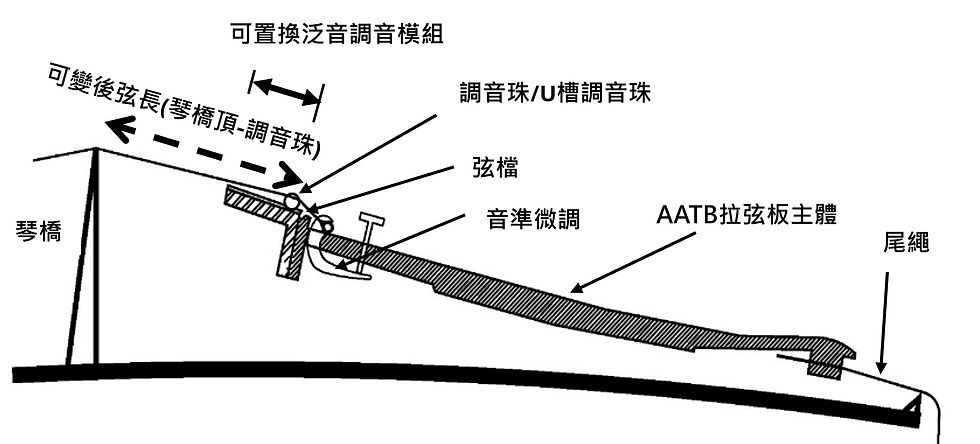
ATTB之原理係以加長傳統拉弦板前端,以調音珠作為可變後弦長之調整支點,利用弦張力自然固定於溝槽,同時亦保留音準微調功能(亦可不加微調),成為同時能調整泛音及音準之完全調音拉弦板。
The basic principle of AATB has a lengthen front segment compared to conventional tailpiece. It utilizes tune beads to define variable string after-length as pivot bearing. The string tensile resultant force stabilize tune beads on the grooves of the module. Nevertheless, it remains pitch tuner to be all purpose tuning tailpiece.


留言